Original Professional Nail Technique
Adaptive E-FileMethod™
The Adaptive E-File Method (AEM) is a structured approach to professional e-file manicure and artificial nail product removal. It is designed to improve control over bit contact, working angles and the amount of mechanical action applied to the nail plate and surrounding tissues.
01 / Overview
A technical system built around controlled contact.
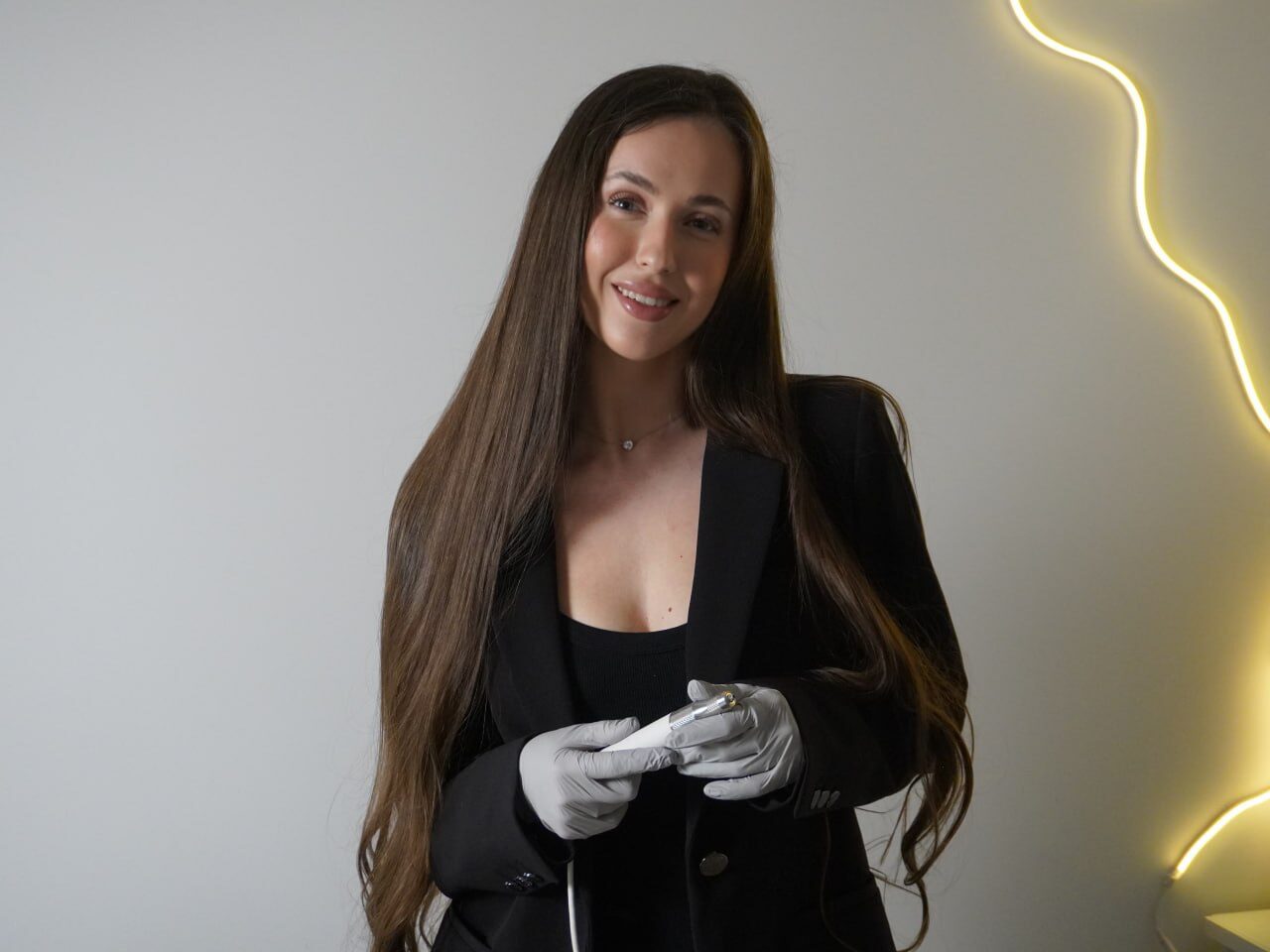
AEM was developed by Vikki Swan in response to recurring technical errors observed in professional practice and education, including excessive pressure, repeated passes over the same area and uncontrolled bit contact near the proximal and lateral nail folds.
Rather than relying on a particular brand of e-file or a newly invented bit, the method establishes a consistent sequence of work. The technician adapts instrument selection, finger positioning and the working surface of the bit to the requirements of each nail.
02 / Technical distinctions
What distinguishes AEM
The method’s defining features concern how the e-file is used: the transition between working phases, the position of the client’s finger and the decision to stop further abrasion.
Controlled Product Removal and Final Smoothing
AEM treats bulk product removal and final smoothing as separate technical tasks. As the remaining coating becomes thinner, the technician changes the way the bit contacts the material, rather than continuing to cut with the same intensity. The finishing approach can be performed without routinely changing the e-file’s rotation direction.
Finger positioning as a working technique
The supporting hand plays an active role: repositioning the client’s finger and retracting surrounding folds to expose the working area. This helps maintain a predictable bit angle and clear visibility of the point of contact, particularly around the cuticle.
No routine over-preparation of the natural nail
When the nail surface has already been adequately prepared for the selected coating system, the method does not call for an additional full-surface pass with a hand file or sanding band. Further abrasion is determined by the condition of the surface, not by a fixed sequence of repeated steps.
03 / Working principles
One Consistent Method. Adapted to Each Nail
The technical sequence remains consistent while specific parameters are adjusted to the client’s nail anatomy and the condition of the coating and surrounding tissues.
01Minimum necessary abrasion
Limit material removal and surface preparation to what the technical task requires; avoid unnecessary repeat passes.
02Visible, accessible working area
Establish clear access to the proximal and lateral areas before using the e-file; do not work where bit contact cannot be observed.
03Control of the bit’s working surface
Consider which part of the bit is in contact, together with the direction of movement, angle and pressure.
04Anatomy-based adjustment
Adapt the diameter of the bit, the finger position and the extent of treatment without changing the underlying technical logic.
04 / Method development
Developed through professional practice and teaching.
Vikki Swan began developing AEM while teaching e-file manicure in 2021. Its structure evolved as she evaluated recurring student errors and refined her working protocols through subsequent training and practice.
Initial development
While teaching in Russia, Vikki began organizing e-file work into more defined technical sequences and identifying recurring sources of uncontrolled abrasion.
Structured protocol
By the start of her teaching practice in the United States, the approach included zoned coating removal, mirrored techniques for right- and left-handed nail technicians and criteria for bit selection.
Further refinement
The method was further developed to distinguish final coating refinement from active removal and to avoid routine additional filing of an adequately prepared nail plate.
05 / Education
How the method is taught
Vikki Swan demonstrates the practical application of her e-file technique in her professional education programs. This page provides an overview of the method rather than its complete working protocol.
In-person classes
During hands-on training in Los Angeles, Vikki demonstrates her approach and works directly with students on tool positioning, contact control and practical application.
In-person trainingNail Insider Club
Vikki also demonstrates elements of AEM within her online nail courses, including e-file manicure, coating removal and related professional techniques.
Nail Insider Club coursesAEM is presented as a practice-based professional technical method. Its aim is to reduce avoidable mechanical contact and technical errors; it is not presented as a clinically validated method for preventing or treating nail disorders.